Tuesday, April 14, 2020

WEEK 13

5 Ways Social Media Harms Your Mental Health | Mahevash Muses
THE ONLINE FOOTPRINT - WHAT'S NEXT? MY SOCIAL SECURITY NUMBER?

Wow. The articles that I read regarding Internet privacy were extremely eye-opening.

I feel like I have a decent sized online footprint. I have Snapchat, Instagram, Facebook and YouTube that I actively engage with every single day. However I do not have a personal website. That is actually something that I need to put on my to-do list.

On Instagram and Facebook, I share the highlights of my life. I might take a picture with a friend, a picture of my cappuccino or simply just an update about my life. I do often post on social media.

A visitor could find out my location, where I live, my job, where I attend school, the clubs/organizations that I am a part of.

I have given out my number and e-mail address to every single social media site that I use. Simply because it is one of the "steps" when making your account. The sites claim that it is a "safer" route and allows for there to be some kind of back-up to information. Reflecting on it now, it is kind of stupid.

I think social media can be amazing. I also think social media can be very toxic. In order to healthily use social media, you need to only follow or connect with accounts that you actually like. You want to enjoy the content that you are seeing. If seeing someone's posts or pictures makes you upset, jealous, or unhappy you need to immediately unfollow/unfriend them. This is where the user makes the decision to use social media in a positive or negative way.

I think social media can make people depressed and isolated. People think that everyone's social media is an accurate reflection of their life. Spoiler alert: it's not. It is only the "highlights" of everyone's life. So you might think that Sally has an incredible, fun life but actually she is very unhappy.

It was one of my New Year's resolutions to make my Instagram less about ME and more about MY LIFE. So I post pictures of what I am doing, the people I am with, the things I am experiencing, etc. Simply not a picture of me. I also have unfollowed or unfriended accounts that I do not enjoy seeing.

It has been a cleansing process for me and now I love social media and do not really feel saddened at all.

https://www.centreformentalhealth.org.uk/blog/centre-mental-health-blog/anxiety-loneliness-fear-missing-out-social-media

WEEK 12

Study shows four different types of Facebook users
EVOLUTION OF FACEBOOK

I recently looked up the Diffusion of Innovations on Wikipedia. This idea was developed by Everett Rogers. It states that diffusion is the process where innovation is communicated through people in a system.

When thinking about recent popular social media platforms, I immediately thought about Facebook.

Facebook first started out as a networking site for college students in the mid 2000s. It instantly became popular. It spread because it was one of the first, what we now call "social media" platforms to be discovered. It was somewhat of a brand new ideal. It was very exciting to be able to see what your friends were doing and that they could share it on a large platform, instead of just a small text. Better yet, you could react to it!

The downside for Facebook was time. This led to some consequences with its demographic. Originally, it instantly gained popularity and all of a sudden, it was not just with the college kids. Older adults began to use Facebook, which turned away the younger audience. What kid wants their parents to be all over their social media? Now you cannot have a picture with an alcoholic beverage in your hand and your parents question your intentions and location.

So Facebook became popular, which then allowed other social media platforms to develop, like Instagram. So the younger generation made Facebook popular and so popular, that the result was adults wanting to join too. The result of this was the younger generation moving to Instagram.

Facebook is still extremely popular, but over time their demographic has changed. At the start it served as a networking site for college students. Now Facebook's demographic are adults 40+.

This serves to be very true in my life. I, unlike my peers, am actually very engaged on Facebook. But the majority of the content that I see is from my friend's parents OR my parent's friends. Older adults love Facebook I think because it almost serves a daily high school reunion.

So it is very interesting to see that over time, Facebook's demographic has made an extreme change.

https://digiday.com/media/social-platforms-college-kids-now-prefer/

WEEK 11

Netflix Co-Founder Marc Randolph Joins HPU as Entrepreneur in ...

INNOVATION AS BACKBONE OF HIGH POINT UNIVERSITY

The value of free expression that speaks to me the most is "Promote Innovation."


This value states that it is, "a community in which free speech is valued and protected is likely
to be a more energized, creative, interesting society as its citizens actively fulfill themselves in
many diverse and interesting ways."


This ideal especially hits home being a student at High Point University. Our school heavily
focuses on innovation. We not only are a life-skills university but are a hands-on school.
I can definitely preach that being a part of the school of communication. I have had many
experiences working with cameras, editing software, reporting on HPUNews, etc. Things a lot
of students will not get to do until their senior year.


With being a hands-on university, this allows the ideal of innovation to come along. When
students can get their hands dirty, that is when the exciting things start to happen. It is when
innovation can be present. 


The value of innovation directly correlates to Cottrell Hall. This building houses our student
success coaches, a Starbucks, an airplane model to remind us to “never miss an opportunity
to network,” and a mock-interview room.


There are also many study spaces that incorporate a creative and collaborative work
environment. One of my favorite places is the Entrepreneurship Center.


The Entrepreneurship Center has white board walls and tables for students to create and
bounce ideas off of one another. Not only does HPU offer entrepreneurship as a major and
minor, but it is also a club organization.


HPU brings in individuals like Marc Randolph and Steve Wozniak, who are founders of Netflix
and Apple, respectively. They will come to campus and connect with students. Students can
share ideas while the highly respected individuals share their expertise.


This, to me, is one of the main selling points of High Point University. I love my school and am
very happy that I chose to come here. So the value of, "promote innovation," speaks volumes
to me because it is a characteristic that HPU practices.

I am very thankful to attend a university that heavily focuses on the image of innovation.
Especially with the incredible advancement of technology, it is a very exciting time to be
a student at High Point University. 

Monday, March 9, 2020

WEEK 7

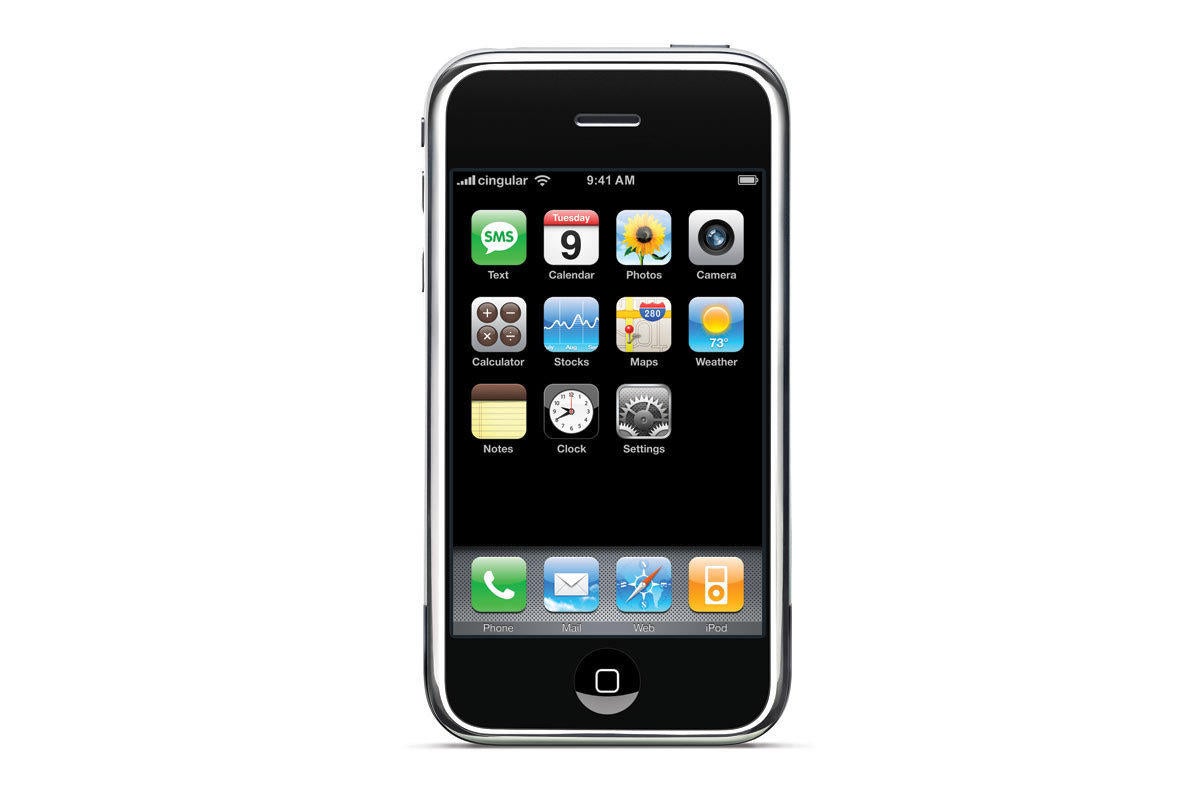
Image result for iphone 2007
BACKGROUND OF THE IPHONE

The coolest thing I learned was that Steve Jobs called the development of this project,
“The Purple Project,” under a name so that no one would be able to really know what
was behind closed doors if somehow information got out.


He announced the iPhone at the MacWorld Convention in January of 2007, and then
the iPhone was released in June of the same year. It was mentioned that Apple sold
270,000 iPhones its first weekend. 


Before iPhones, smartphones were typically copies of the Blackberry. So it was
incredible to see a phone that was not only touch screen, but a completely different
look than what was normally seen on the market.


It then took 6-7 years before a phone was developed that could actually compete
with the iPhone, which ended up being the Samsung Galaxy S/HTC.


One negative of the iPhone mentioned in the presentation was the light of the screen.
There are negative aspects of the light such as eye strain and not allowing you to go to sleep.

I loved this presentation because simply, I love Apple and I love my iPhone. So I
thoroughly enjoyed getting to here about the background of this product and the
way it has transformed our communication world!

WEEK 6


Image result for charles francis jenkins
THE FIRST TELEVISION BROADCAST

For my piece of communication technology, I decided to choose the television broadcast.
I have also loved television and love watching live broadcasts, whether it is the local
news or a national news outlet. I love the idea that it is live and you are getting up to date
information, hence why I chose the television broadcast as my piece of technology.


The first television broadcast occurred on July 2, 1928. It was created by a man named
Charles Francis Jenkins. It actually was located in Wheaton, Maryland which is a suburb
of DC and the TV station was given the name W3XK. 


Something I found very interesting with this timeline is that this happened in 1928,
which really was the last year before the Great Depression. So just to give a background
of what was about to happen in our nation I find this extremely pivotal.


Through this TV station, Charles Francis Jenkins invented a way to transmit pictures
over airwaves. He ended up calling this process, “radio vision.” Luckily at the time,
he was given permission to experiment with the station so he could really solidify
and figure out everything. 


Jenkins aired programming five nights a week! Something funny I found out was
that oddly enough, it was commercial free for the first 13 years. Man oh man, what
would it be like to watch commercial free television? One can wish!


This entire idea of a live television broadcast and the first TV station, really sparked
an interest for the TV sets in general. As we know, eventually TVs transformed from
black and white to color as it quickly became a popular ideal.

In today’s society, there are now 2.5 televisions per household globally. This just
shows you how important television sets are to the people of today. There are
now close to 2 billion televisions sets in this world. So people must love watching TV, right?

https://bebusinessed.com/history/history-of-the-television/

WEEK 5

Image result for elizabeth warren
ELIZABETH WARREN IS BASHED

I explored the site, American Conservative. I read an article titled, “Elizabeth Warren
Lost Because She’s Elizabeth Warren.” What a strongly negative and opinionated
article!


The article goes on to degrade Warren and everything “wrong” about her candidacy. A quote from
the article that truly evokes the feeling of the entire article (and author) is,
“Sexism had nothing to do with it. The Massachusetts senator was unlikeable and showed
contempt for the truth.” So it is easy to see that we are seeing the opinions of someone who is far right.


The article develops into a “this is why Elizabeth Warren was such a poor choice” article.
It describes the primary season as “long, and excruciatingly stupid.” It mentioned that she
was politically toxic coming from a brand of white progressivism. 


Some of the article’s content include Warren’s views and plans if she were to become
elected. The author continues to react negatively towards these views. The author
also includes Twitter posts that were used to defend Warren, as then the author
dismisses all supportive tweets.

These voices are not in the mainstream media because I believe that most media
agrees with the left side. While I do tend to agree with the left side, it is easy to
say that there are less and less conservative outlets in mainstream media.
To find these opinions, you either have to A) search into the depth of Google
or B) just go on Facebook. So it is very interesting to see how an article like t
his would never even appear on a major news outlet, as a similar article bashing
the right side would be normal.

Saturday, February 29, 2020

WEEK 4

Image result for google images facebook


FACEBOOK IS SMARTER THAN YOU THINK

This article discusses Facebook and its relationship with its consumers. Facebook currently has
2.5 billion users worldwide. But most users probably do not know that they are being exposed.


An unsecured server leaked phone numbers that were potentially linked to Facebook users.
It is now no longer publicly accessible as it has recently been taken down, but no one is
positive who revealed the numbers.


This shows just how unsafe social media is. With most organizations moving into the world of
the Internet, many files and logistics are also being transferred online. But many of these
organizations do not have the expertise to do so efficiently, and most important of all, safely.


The article referenced Eva Velasquez, president and CEO of Identity Theft Resource
Center. She said, “The exposed data could put users at risk of scam phone calls and other fraud.”


This is certainly a scary scenario being that Facebook has many older users compared to other
social media outlets. Many older adults might not understand how smart scammers can be and
can easily be looped into the whole plan so it really is a scary time.


Social media has been seen as “toxic” because it only shows everyone’s “highlight.” It
is not realistic. People are not going to post the negative things in their life, which
makes people think that everyone is living a perfect and happy life except them.

Social media is now not just taxing on mental health, but as the article states, our
identity could be in jeopardy. 

Final Post

SOCIETY AND TECHNOLOGY: A CURRENT UNHEALTHY RELATIONSHIP Society and technology are in an intimate relationship. In fact, they are soul m...